Key Takeaways
- Primary Catalyst: Braemar Hotels & Resorts’ board unveiled a 2027 common stock dividend policy and a new $20 million share repurchase program.
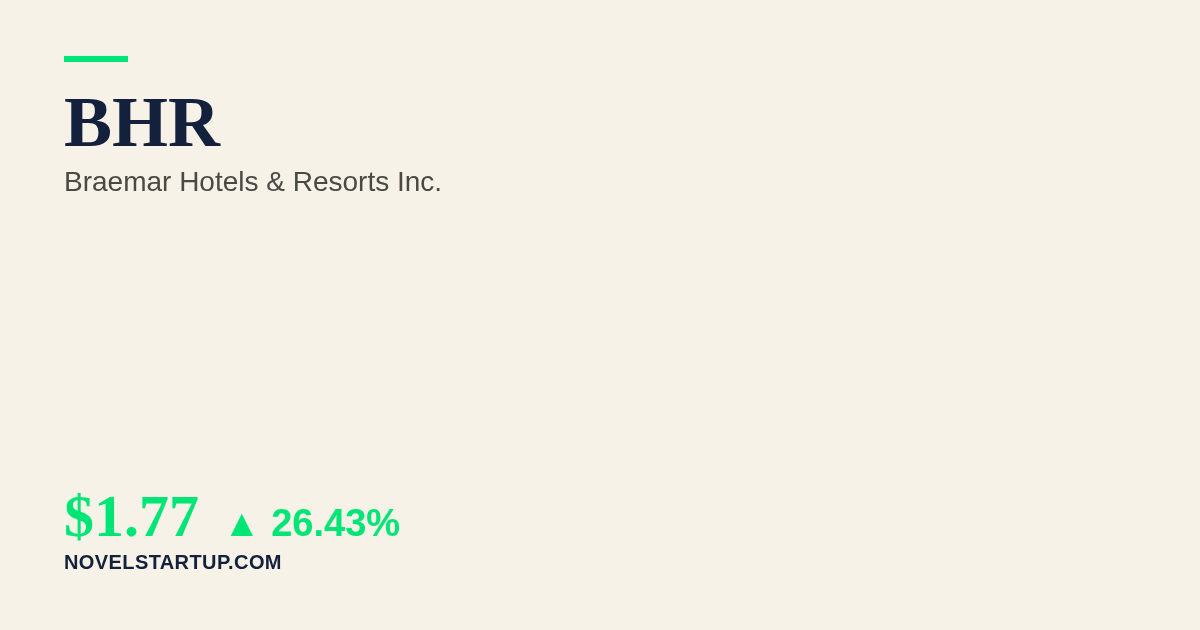
- Session Performance: BHR, up 26.43% today.
- Macro Environment: Nasdaq futures fell over 2.8%, S&P 500 futures down roughly 1.9%, amid concerns over new U.S. tariff plans and PCE inflation data.
| Metric | Detail |
|---|---|
| Asset / Ticker | BHR (Braemar Hotels & Resorts Inc.) |
| Current Price | [$1.77] |
| Session Movement | [+26.43%] |
| Category | Market-Movers |
The Catalyst Driving Today’s Movement
Braemar Hotels & Resorts Inc. (BHR) has been a notable market mover today, with its stock price surging 26.43% as of the current market session. The primary catalyst behind this significant price movement is the company’s board-approved 2027 common stock dividend policy and a new $20 million share repurchase program. These developments have provided investors with compelling reasons to bid up BHR shares, despite a challenging macro backdrop.
The reinstatement of a common dividend, a milestone for income-focused REIT investors, is a key factor driving the stock’s upward momentum. The announcement of a fixed monthly dividend policy for 2027 signals a commitment to returning capital to shareholders, with the 8.5% yield offering an attractive return relative to the recent share price. This move is particularly significant for income-focused investors, who often prioritize dividend yield as a key investment criterion.
Furthermore, the capital discipline signaled by the $20 million buyback authorization has also contributed to the stock’s upward movement. This authorization provides the company with the flexibility to capitalize on market conditions when warranted, allowing it to potentially enhance shareholder value through strategic share repurchases.
Financial Fundamentals & Filings
A closer examination of Braemar Hotels & Resorts’ financial fundamentals reveals a company with a solid track record of performance. The company’s recent quarterly earnings data, announced on November 4th, showed a net loss of $3.51 per share, missing the consensus estimate of ($0.71) by ($2.80). However, the company’s revenue of $101.58 million during the quarter was in line with analysts’ expectations of $103.61 million.
BHR’s financials also demonstrate a relatively low debt-to-equity ratio of 5.03, indicating a manageable level of leverage. The company’s quick ratio of 1.56 and current ratio of 1.56 further suggest a strong liquidity position, allowing it to meet its short-term obligations.
Market Anchors & Sector Sentiment
The broader market environment has been decidedly unfavorable for equities today, with Nasdaq futures falling over 2.8% and S&P 500 futures down roughly 1.9%. This risk-off tone has been driven by concerns over new U.S. tariff plans and PCE inflation data, which are expected to impact the Federal Reserve’s December meeting. However, BHR’s pre-market advance has stood in stark contrast to this risk-off tone, underscoring the company-specific nature of the catalyst.
The recent analyst upgrade from Sell to Hold, citing the Ashford separation and the Al Shams settlement as developments that removed key uncertainties, has also contributed to the stock’s upward movement. The analyst’s estimated value for the shares ranges from $3.19 to $6.43 per share, suggesting meaningful upside from current levels even as leverage and preferred equity obligations were flagged as ongoing risks.
Volume Dynamics & Volatility
The significant price movement in BHR shares today has been accompanied by increased trading volume, with over 1.59 million shares changing hands as of the current market session. This elevated trading activity is a reflection of the heightened interest in the stock, driven by the company’s recent announcements and the potential for future upside.
The stock’s volatility has also increased, with a beta of 0.85 indicating a relatively low level of sensitivity to market movements. However, the recent price action suggests that investors are becoming increasingly optimistic about the company’s prospects, potentially driving further price appreciation in the near term.
Macro Context
The recent market performance of the S&P 500 and Nasdaq indices provides a broader context for BHR’s price movement. The S&P 500 has been trending lower in recent sessions, driven by concerns over inflation and interest rates. The Nasdaq, which has been heavily influenced by the technology sector, has also been under pressure, with many tech stocks experiencing significant declines.
In this challenging macro environment, BHR’s price movement stands out as a notable exception. The company’s commitment to returning capital to shareholders through its dividend policy and share repurchase program has provided investors with a compelling reason to bid up the stock, despite the broader market headwinds.
FAQ
Q: What is the primary catalyst driving BHR’s price movement today? A: The company’s board-approved 2027 common stock dividend policy and a new $20 million share repurchase program.
Q: What is the significance of the 8.5% yield offered by BHR’s dividend policy? A: The 8.5% yield offers an attractive return relative to the recent share price, making it an attractive option for income-focused investors.
Q: What is the impact of the $20 million buyback authorization on BHR’s stock price? A: The authorization provides the company with the flexibility to capitalize on market conditions when warranted, potentially enhancing shareholder value through strategic share repurchases.
The content on NovelStartup is for informational purposes only and does not constitute professional financial advice. Consult a certified financial advisor before making any major financial decisions.