Key Takeaways
- Primary Catalyst: S&P 500 correction, Nasdaq year-to-date loss
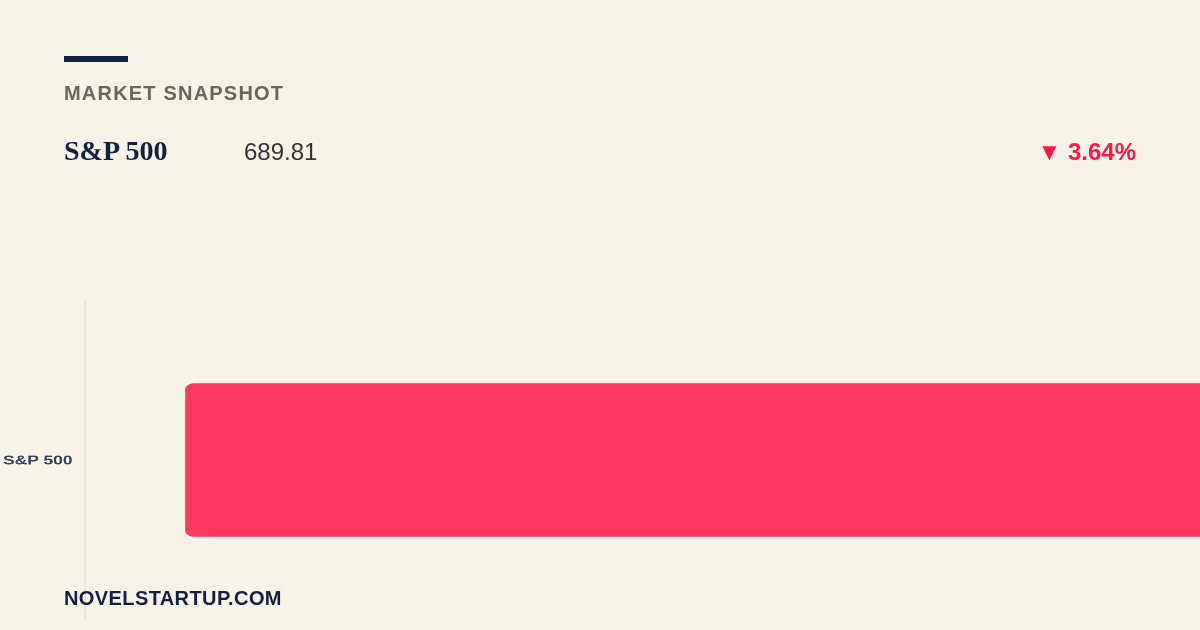
- Session Performance: S&P 500: -3.64% (-689.81), Nasdaq: -2.7% (year-to-date loss)
- Macro Environment: Broader index performance, sector rotations, inflation/interest rate factors
Financial Snapshot Table
| Metric | Detail |
|---|---|
| S&P 500 | -3.64% (-689.81) |
| Nasdaq | -2.7% (year-to-date loss) |
| Category | US Stock Market |
The Catalyst Driving Today’s Movement
The US stock market experienced a sharp decline, with the S&P 500 hitting correction territory and the Nasdaq turning negative for the year. This downturn has been driven by growing doubts about the AI trade, including concerns about the sustainability of heavy spending on data centers that has driven both profit and economic growth. The start of Federal Reserve interest rate hikes has also triggered anxiety about risk assets.
Financial Fundamentals & Filings
Despite the selloff, valuations have been reset to more attractive levels, and investor sentiment metrics have weakened to levels that often historically have been signals to buy. However, emotional investors can overwhelm opportunistic ones in the short term. Analysts are turning to technical indicators, market internals, and other metrics for signals of a possible bottom.
Market Anchors & Sector Sentiment
Consumer staples and other relatively defensive areas of the market have recently shined, but investors are looking for strength in economically sensitive areas such as banks and industrials as indication that sentiment is stabilizing. The Cboe Market Volatility index, which closed at 35.89, its highest level since April 2025, is also in focus for investors. Spikes in the volatility index could be a sign of extreme pessimism that paves the way for future gains.
Volume Dynamics & Volatility
The market’s six-week slide has come amid growing doubts about the AI trade, and the start of Federal Reserve interest rate hikes has triggered anxiety about risk assets. The S&P 500 has fallen for seven straight sessions, its longest daily streak of declines since the onset of the coronavirus pandemic in 2020. The tech-heavy Nasdaq Composite has lost its year-to-date gain, and was now down 2.7% in 2026.
Macro Context
The S&P 500’s decline has been significant, with the index down 11.6% from its October 6 all-time high. This exceeds the 10% decline confirming a correction for the benchmark US stock index for the first time since March 2025. The market’s performance has been influenced by the start of Federal Reserve interest rate hikes and growing doubts about the AI trade.
Macro Outlook
US markets could see reduced trading volume in coming days, with fewer trading days next week due to the Thanksgiving holiday on Thursday. The Fed’s next rate-setting meeting on December 8-9 loomed as a potentially pivotal moment for markets. The US central bank is widely projected to raise rates by a standard quarter percentage point, but any signals for how many more hikes are expected this cycle will be crucial for stocks.
Macro Factors
Developments related to the outlook for AI investment also could be critical. While earnings season is largely done, results from semiconductor company Micron Technology on December 17 could have broad implications. There are many valuations that are still excessive, and this seems like a real correction which has further to go.
FAQ
Q: What is the current state of the US stock market? A: The US stock market has experienced a sharp decline, with the S&P 500 hitting correction territory and the Nasdaq turning negative for the year.
Q: What are the primary catalysts driving today’s market movement? A: Growing doubts about the AI trade and the start of Federal Reserve interest rate hikes are the primary catalysts driving today’s market movement.
Q: What are the key metrics to watch for signals of a possible bottom? A: Technical indicators, market internals, and other metrics such as the Cboe Market Volatility index are key metrics to watch for signals of a possible bottom.
Q: What is the impact of the Fed’s next rate-setting meeting on December 8-9? A: The Fed’s next rate-setting meeting on December 8-9 could be a potentially pivotal moment for markets, with any signals for how many more hikes are expected this cycle crucial for stocks.
The content on NovelStartup is for informational purposes only and does not constitute professional financial advice. Consult a certified financial advisor before making any major financial decisions.