Key Takeaways
- Primary Catalyst: Ongoing inflation concerns and producer price index reading
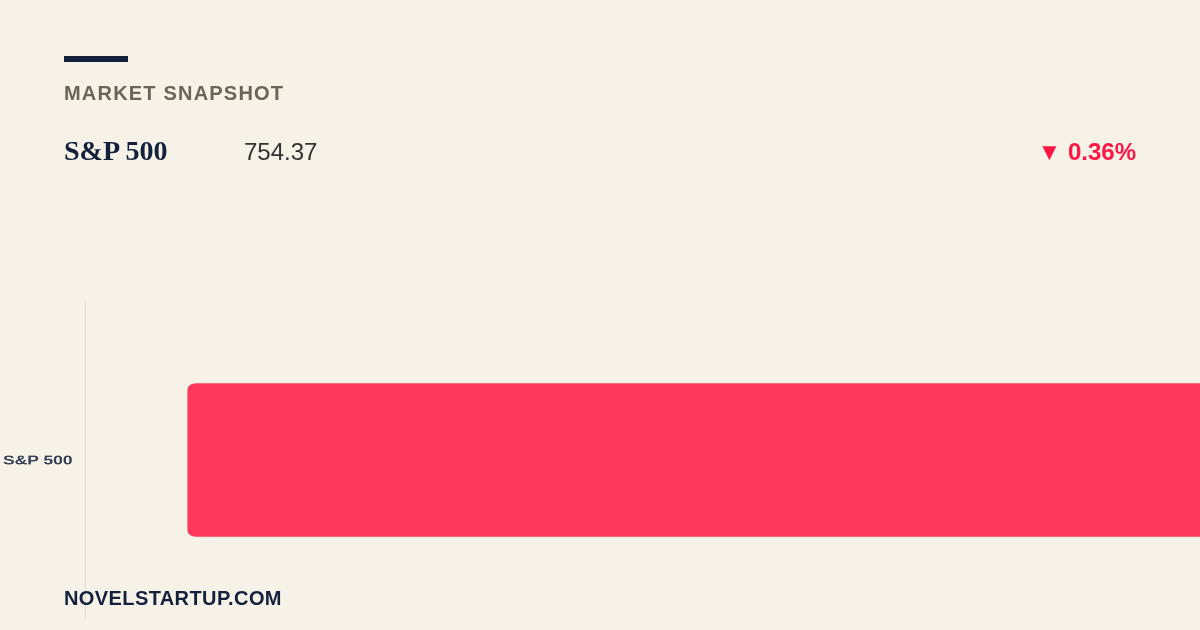
- Session Performance: S&P 500 fell 0.36%, Nasdaq dropped 0.91%, Dow Jones eked out a 0.1% gain
- Macro Environment: Major averages notched weekly advances despite Friday’s losses, with S&P 500 up 2.5% and Nasdaq rising 2.3%
Financial Snapshot Table
| Metric | Detail |
|---|---|
| S&P 500 | 754.37 (-0.36%) |
| Current Price | [$754.37] |
| Session Movement | [-0.36%] |
| Category | Index |
| Nasdaq | 25,136.27 (-0.91%) |
| Current Price | [$25,136.27] |
| Session Movement | [-0.91%] |
| Category | Index |
| Dow Jones | 52,347.55 (0.1%) |
| Current Price | [$52,347.55] |
| Session Movement | [+0.1%] |
| Category | Index |
The Catalyst Driving Today’s Movement The S&P 500, Nasdaq, and Dow Jones Industrial Average all experienced losses on Friday, with the S&P 500 falling 0.36% and the Nasdaq dropping 0.91%. The Dow Jones eked out a 0.1% gain. The primary catalyst behind today’s movement appears to be ongoing inflation concerns, as the producer price index (PPI) reading showed a 0.3% increase in October, which was less than expected. However, the PPI also rose 6.5% from 12 months earlier, the biggest annual advance since November 2022.
Financial Fundamentals & Filings The latest PPI reading highlights the ongoing inflation pressures facing the US economy. The 0.3% increase in October was less than the 0.4% expected by economists polled by Dow Jones. However, the 6.5% annual increase in the PPI is a concern for the Federal Reserve, which is already grappling with the decision to raise interest rates further. The Fed’s next meeting is scheduled for December 9, and investors are now pricing in a near certainty of a rate hike, with 100% odds according to the CME Group’s FedWatch tool.
Market Anchors & Sector Sentiment Despite the losses on Friday, the major averages notched weekly advances, with the S&P 500 rising 2.5% and the Nasdaq gaining 2.3%. The Dow Jones Industrial Average advanced 2.1%. The technology sector, led by Nvidia, was a key driver of the losses on Friday, with the company’s shares continuing to decline after CEO Jensen Huang resigned amid growing scrutiny over his ties to a businesswoman suspected of links to Chinese intelligence.
Volume Dynamics & Volatility The VIX, Wall Street’s fear gauge, fell to 19.30, suggesting that broader market anxiety eased despite the upheaval in the technology sector. The 10-year U.S. Treasury yield remained over 5% on Friday, with the yield rising nearly 4 basis points to 5.14%. Oil prices also edged higher, with crude oil trading near $88.92 per barrel.
Macro Context The major benchmark indices, including the S&P 500, Nasdaq, and Dow Jones, all experienced losses on Friday. However, the week’s performance was still positive, with the S&P 500 rising 2.5% and the Nasdaq gaining 2.3%. The Dow Jones Industrial Average advanced 2.1%. The losses on Friday were largely driven by the technology sector, which was impacted by Nvidia’s continued decline.
India’s Macro Environment In India, the October wholesale inflation is scheduled for Monday, November 16. The market participants expect it around 12.1% year on year, compared with 11.39% in September. Following the 6.09% CPI reading, the main question is whether fuel and manufacturing prices signal further pressure on consumer inflation and margins.
FAQ
Q: What was the primary catalyst behind today’s market movement? A: The primary catalyst behind today’s market movement appears to be ongoing inflation concerns, as the producer price index (PPI) reading showed a 0.3% increase in October, which was less than expected.
Q: How did the major benchmark indices perform on Friday? A: The S&P 500 fell 0.36%, the Nasdaq dropped 0.91%, and the Dow Jones eked out a 0.1% gain.
Q: What is the current state of the technology sector? A: The technology sector was a key driver of the losses on Friday, with Nvidia’s continued decline weighing on technology shares.
The content on NovelStartup is for informational purposes only and does not constitute professional financial advice. Consult a certified financial advisor before making any major financial decisions.