Key Takeaways
- Primary Catalyst: Fears of an AI bubble bursting amid concerns over sustainability and regulatory pressures
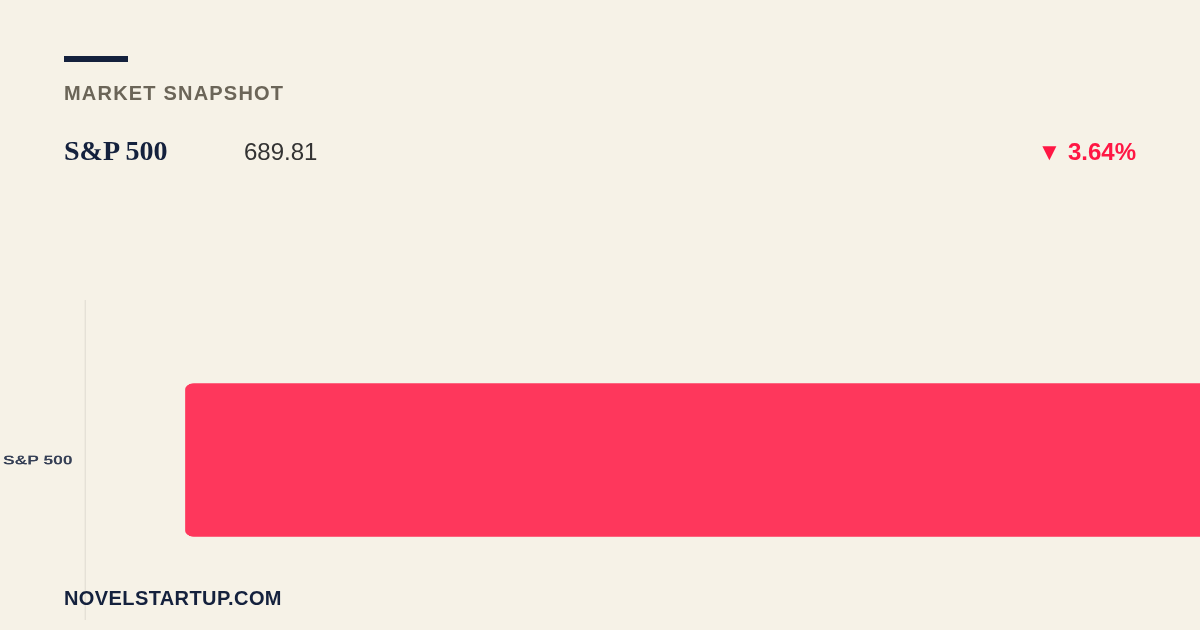
- Session Performance: S&P 500: -3.64%, Nasdaq: -10% for the week, Dow Jones: entered correction territory
- Macro Environment: Broader market correction, tech-heavy Nasdaq experiencing its worst performance since COVID-19 pandemic lockdowns
| Metric | Detail |
|---|---|
| Asset / Ticker | S&P 500 |
| Current Price | $689.81 |
| Session Movement | -3.64% |
| Category | Major Benchmark Index |
The Catalyst Driving Today’s Movement
The AI boom, which has powered markets to record highs and supported the broader economy, showed signs of unraveling this week. Investors’ fears of an AI bubble bursting have sparked a steep drop in stock markets, with the tech-heavy Nasdaq experiencing its worst performance since the COVID-19 pandemic lockdowns in March 2020. The Nasdaq dropped 10% for the week, while the S&P 500 and the Dow Jones Industrial Average entered correction territory.
Financial Fundamentals & Filings
The Federal Reserve’s decision to raise interest rates for the first time in over three years poses a significant challenge to AI companies, which still need to borrow billions of dollars to build out data centers that power the growth of their technologies. Higher interest rates make borrowing more expensive for AI companies, exacerbating investors’ worries about the sustainability of the AI trade. Democrats’ vow to take a tougher regulatory approach toward the AI sector and slow down the build-out of data centers has also contributed to the decline in AI-related stocks.
Market Anchors & Sector Sentiment
The AI sector’s interconnectedness is raising concerns about the potential for a chain reaction that could lead to a financial crisis. Nvidia, the top AI chip company, is a major investor in other big AI companies like Anthropic and is also lending a lot of money to them. This circular system of financing involves lesser-known companies, such as CoreWeave, that are borrowing heavily to build out data centers. If one or two companies run into trouble, it could kick off a chain reaction that could lead to a financial crisis.
Volume Dynamics & Volatility
The AI-led sell-off has been a significant source of debate on Wall Street. Some people fear that the AI sector could be in the middle of a bubble that is bursting, just like tech stocks did during the dot-com bust of 2000. However, Hank Smith, the head of investment strategy at Haverford Trust, argues that this time around the AI trade is being powered by top companies such as Meta and Apple, and he doesn’t see them as likely to go out of business.
Macro Context
The U.S. economy has effectively become an AI economy, with AI investments helping the economy grow at an annual rate of 3.4% in the most recent quarter. Not only that, but AI-related stocks have become an integral part of the broader markets, accounting for a substantial portion of the S&P 500. If the AI trade unravels, it could have a ripple effect far beyond the high-tech world.
FAQ
Q: What is driving the decline in AI-related stocks? A: Fears of an AI bubble bursting amid concerns over sustainability and regulatory pressures.
Q: How has the Nasdaq performed this week? A: The Nasdaq dropped 10% for the week, its worst performance since the COVID-19 pandemic lockdowns in March 2020.
Q: What are the potential financial consequences of the AI trade unraveling? A: It could have a ripple effect far beyond the high-tech world, potentially leading to a financial crisis.
The content on NovelStartup is for informational purposes only and does not constitute professional financial advice. Consult a certified financial advisor before making any major financial decisions.